Vinicunca Rainbow Mountain Peru: Complete Travel Guide (2026)
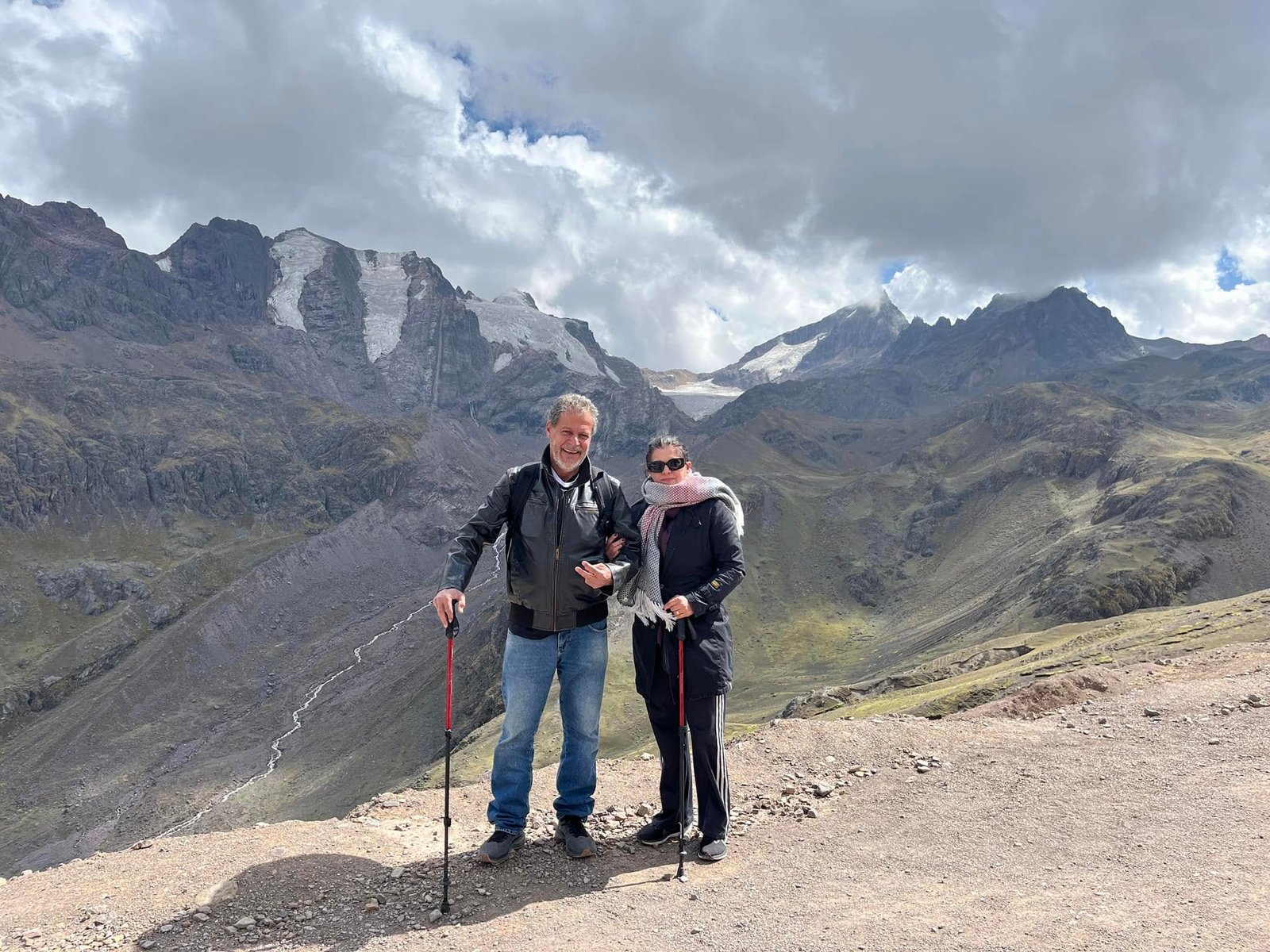
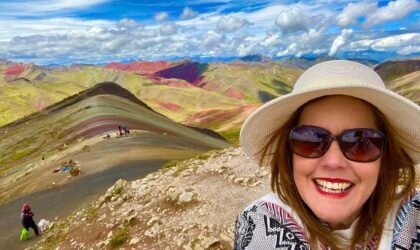
Vinicunca Rainbow Mountain is one of the most iconic attractions in Cusco and one of the top experiences you should consider adding to your Peru itinerary. In this guide, you’ll find detailed information to help you decide whether this incredible destination is right for you. You’ll also learn more about its history, geography, culture, and everything you need to know before visiting one of Peru’s most spectacular natural wonders.

History
During the pre-Hispanic period, the vast Andean highlands, including the area surrounding Vinicunca Rainbow Mountain, together with the neighboring rural communities, were primarily dedicated to raising large herds of llamas and alpacas. During the Inca Empire, these animals belonged to the State and were cared for by local families responsible for breeding, counting, and managing them. Their wool, meat, and ability to transport goods made them an essential resource for the Inca economy.
During the Spanish colonial period, life in these remote mountains changed very little. In fact, these isolated landscapes became a refuge for many Andean people escaping the harsh treatment and difficult living conditions imposed by the Spanish. Over time, small settlements were established in the highlands, eventually becoming the rural communities that still exist throughout the Peruvian Andes today. The communities surrounding Vinicunca are an example of this historical process. Because the mountain lies on a natural mountain pass between their territories, several communities share both its surroundings and its cultural heritage.
For the Andean civilizations, mountains have always held profound spiritual significance. They were worshipped as sacred beings (Apus) and played a central role in local beliefs and traditions. Vinicunca was likely considered an important sacred mountain long before becoming a world-famous tourist destination, not only because of its extraordinary colors but also because it served as a natural passage through the Vilcanota mountain range.
Many people believe that Rainbow Mountain was only recently “discovered” as a result of global warming. However, the geological characteristics of the mountain suggest that it was never permanently covered by glaciers. Furthermore, elderly residents from nearby communities recall seeing the mountain displaying its colorful layers since their earliest childhood, long before it gained international recognition.
Although Vinicunca became internationally famous between 2014 and 2016, adventurous trekkers had already been visiting the area since the early 2000s while hiking the classic Ausangate Trek, one of Peru’s most spectacular high-altitude routes. Today, Vinicunca is recognized worldwide and has become the second most visited tourist attraction in the Cusco region, after Machu Picchu.
Location: Where is Vinicunca Rainbow Mountain?
The Andes Mountains form the longest continental mountain range in the world, stretching across Peru, Chile, Argentina, Bolivia, Ecuador, Colombia, and Venezuela. This immense natural barrier creates diverse ecosystems and microclimates that make South America one of the world’s richest regions in biodiversity.
Vinicunca Rainbow Mountain is located within the Vilcanota Mountain Range, in the Southern Peruvian Andes. It lies on the border between the districts of Pitumarca and Cusipata, belonging respectively to the provinces of Canchis and Quispicanchi, in the Cusco region.
Since 2019, the mountain has also been part of the Ausangate Regional Conservation Area, a protected natural reserve covering approximately 66,000 hectares, created to preserve one of the most spectacular mountain ecosystems in Peru.
Vinicunca is located approximately 120 kilometers (75 miles) southeast of Cusco’s Historic Center.
Coordinates:
13°52′10″S 71°18′11″W
(-13.869534, -71.302960)
Etymology: What does Vinicunca mean in Quechua?
Peru recognizes Spanish, Quechua, and Aymara as its official languages, as they are the most widely spoken throughout the country. In addition, Peru is home to 44 major Amazonian languages, not including their many dialects, which would significantly increase that number. Throughout Peru’s long cultural history, several other languages, such as Puquina, Yunga, and Muchik (Mochica), have disappeared. Nevertheless, these ancient languages remain important references when studying the origins of many geographical names that have survived to the present day.
In the case of Vinicunca, the meaning is relatively straightforward. The name is derived from two Quechua words that are still used today:
- Vini or Viñi: A traditional Andean hat or headdress worn in the region.
- Cunca (Qunka): In geographical terminology, it means mountain pass, mountain saddle, or highland pass.
Therefore, Vinicunca can be interpreted as “the mountain pass of the traditional Andean hat,” a name inspired by the mountain’s distinctive shape and its role as a natural pass through the Andes.
Altitude
Before visiting Vinicunca Rainbow Mountain, it’s important to understand the effects of high altitude on your body. This is one of the most significant factors when planning your trip.
Your journey begins in Cusco, located at 3,350 meters (10,990 feet) above sea level, and gradually ascends to the highest viewpoint of Vinicunca at approximately 5,036 meters (16,522 feet) above sea level. From this panoramic viewpoint, visitors can enjoy the breathtaking landscapes and capture the iconic photographs that have made Rainbow Mountain famous around the world.
In the following chart, you can see the main points of the route and their approximate elevations.
Tips to Prevent Altitude Sickness at Vinicunca Rainbow Mountain
Visiting Vinicunca Rainbow Mountain is a rewarding challenge for many travelers. However, your health and safety should always come first. We do not recommend this excursion if you have any of the following medical conditions:
- Asthma or severe respiratory illnesses.
- Heart disease or cardiovascular conditions.
- High or unstable blood pressure.
We also do not recommend this tour for very young children (0–6 years old), as they are more vulnerable to the effects of high altitude. If you are traveling with small children, we recommend booking a private tour, which offers greater flexibility and personalized assistance.
Once you have decided to visit Vinicunca, the best approach is to begin preparing before arriving in Peru. We recommend consulting your physician in advance. Typical recommendations include:
- Eating more fresh vegetables.
- Reducing sugar intake.
- Performing regular cardiovascular exercise.
- Increasing your consumption of citrus fruits.
Keep in mind that every traveler is different, and your doctor may recommend additional precautions based on your health.
Another essential recommendation is to stay well hydrated. Proper hydration involves more than simply drinking water—it also means avoiding dehydration and refraining from consuming alcoholic beverages, especially before your hike.
Once you arrive in Cusco, drinking coca leaf tea regularly can help many visitors adapt more comfortably to the altitude. However, coca products are not recommended for people with hypertension and should be consumed in moderation by individuals who are sensitive to caffeine, as coca leaves produce similar stimulating effects.
Many local travelers also use Agua Florida, rubbing alcohol, or aromatic herbs before beginning the hike. Their strong aromas may help create a sensation of easier breathing. If you have allergies or sensitivities to fragrances, use these products with caution.
Dress in layers to maintain a comfortable body temperature throughout the excursion. Mountain weather changes quickly, and proper clothing will help you adapt to varying temperatures while also protecting you from the intense Andean sun. Wearing a hat or cap is highly recommended.
If you have no medical contraindications, carrying a few candies or energy sweets can help maintain your blood sugar levels during the hike and compensate for the significant energy expenditure required at high altitude.
Finally, supplemental oxygen should only be used as a last resort, as some travelers experience increased anxiety after using it. If altitude symptoms become severe, the safest decision is to discontinue the hike and rest inside the support vehicle.
How to Get to Vinicunca Rainbow Mountain
Today, Vinicunca Rainbow Mountain offers several ways to reach this spectacular destination. There is more than one access route, and visitors can choose from different experiences, including traditional hiking, ATV tours, horseback riding, or motorcycle transportation, depending on their preferences and fitness level.
Access Routes
Cusco – Cusipata – Vinicunca
This is the newest official access route to Vinicunca and has quickly become the most popular option thanks to its shorter travel time. From Cusco, the journey covers approximately 110 kilometers (68 miles) and takes around 2 hours and 20 minutes of driving.
Most organized tours include a scheduled breakfast stop lasting approximately 30 minutes before continuing toward the mountain.
The first 80 kilometers (50 miles) are traveled on a paved highway. After leaving the main road, the route continues along a gravel road of varying conditions until reaching the Phulawasipata parking area, the starting point for most hikes to Rainbow Mountain.
Cusco – Pitumarca – Vinicunca
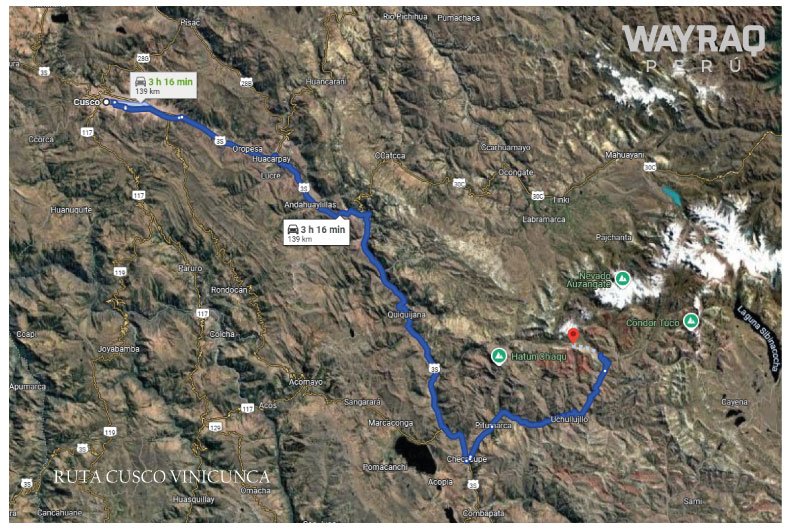
This is the original access route to Vinicunca and also the longest. The journey covers approximately 130 kilometers (81 miles) from Cusco to the final parking area.
From this point, visitors may continue on foot, hire motorcycle transportation, or, when available, join an ATV tour. Since ATV availability is limited on this route, reservations should be made well in advance.
The first 105 kilometers (65 miles) are traveled on paved roads, while the final section follows a gravel mountain road leading to the parking area.
From the Sacred Valley of the Incas
It is also possible to visit Vinicunca Rainbow Mountain directly from the Sacred Valley of the Incas. This service is offered as a private tour, allowing you to finish your excursion either back in the Sacred Valley or in the city of Cusco.
Choosing this option is highly recommended because it helps you make the most of your itinerary, reducing unnecessary travel time and giving you more opportunities to enjoy other attractions in Cusco and the Sacred Valley.
If you would like more information about this private service, click here.
Visiting Vinicunca on Your Own
Independent travelers can certainly visit Vinicunca Rainbow Mountain without joining an organized tour. However, before choosing this option, keep in mind that traveling independently may actually be more expensive once transportation costs are considered, whether using public transportation or driving your own vehicle.
To reach Vinicunca independently by public transportation, first take a taxi from Cusco’s Historic Center to the Casa de la Juventud Coliseum, approximately 10 minutes away. From there, buses depart every hour to Cusipata, a journey of approximately 2 hours.
Once in Cusipata, you’ll need to hire a private vehicle near the local market to reach Phulawasipata, the main parking area for Rainbow Mountain. It is advisable to arrange round-trip transportation in advance so the driver can wait for you during your hike.
If you’re driving your own vehicle, we recommend filling your fuel tank before leaving Cusco. Continue to the town of Cusipata, where you’ll find the turnoff just before the bridge leading into town. From there, follow the mountain road to the Phulawasipata parking area, where you’ll begin the approximately 2-hour uphill hike before returning along the same route.
Visiting with a Travel Agency
Booking with a professional travel agency is undoubtedly the most convenient and recommended way to visit Vinicunca.
Whichever operator you choose, avoid selecting tours based solely on unusually low prices. Rainbow Mountain is a full-day, high-altitude excursion that requires careful planning, reliable transportation, experienced guides, and well-organized logistics to ensure a safe and enjoyable experience.
Depending on the tour you choose, your package may include one or more of the following services:
Things to Do at Vinicunca Rainbow Mountain
Panoramic Hiking Trek
The most traditional way to experience Vinicunca Rainbow Mountain is by hiking the scenic trail that connects the parking area with the mountain’s highest viewpoint. The hike takes approximately 2 hours and follows a gradual uphill path that is well-marked and easy to follow.
The final 10 to 15 minutes are considerably steeper, but the breathtaking panoramic views at the summit make the effort worthwhile.
This is the most popular tour option offered by travel agencies and usually includes round-trip transportation, breakfast, lunch, and professional guide service. As always, we recommend choosing reputable operators instead of selecting tours solely based on unusually low prices.
ATV & Off-Road Motorcycle Adventure
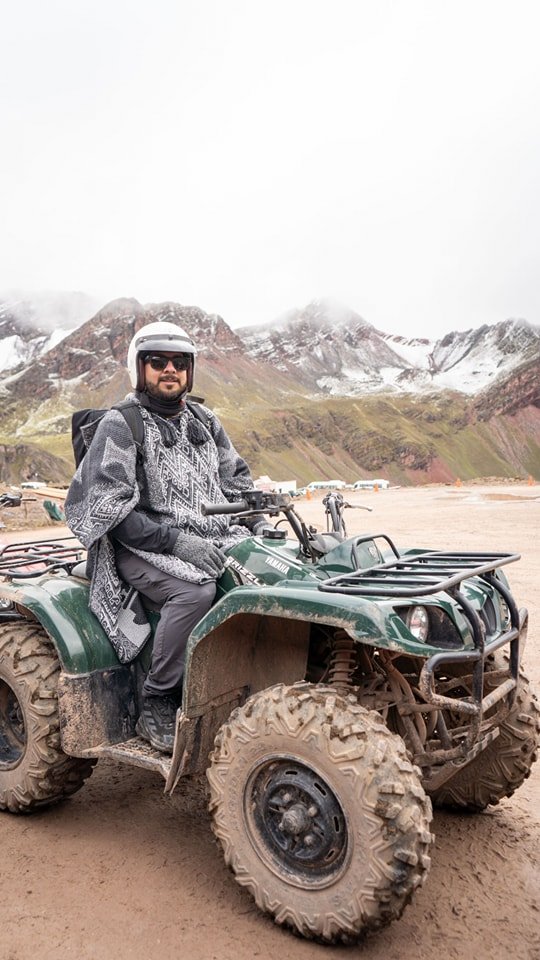
For travelers looking for a more exciting way to reach Rainbow Mountain, ATV tours and off-road motorcycle transportation offer an unforgettable alternative.
ATV tours are currently the most requested adventure experience, and availability is limited. For this reason, we highly recommend booking well in advance.
Tours depart from Cusco in organized groups and generally include breakfast, buffet lunch, transportation, a professional guide, and an experienced ATV instructor. Although the activity is considered low-risk, participants should always follow the instructor’s safety guidelines carefully.
The ATV route finishes close to Rainbow Mountain, followed by a short walk to the main viewpoint.
Alternatively, visitors can choose the off-road motorcycle service, where a local driver transports passengers to an area near the main viewpoint. Unlike ATV tours, these motorcycles operate exclusively as transportation and are not available for self-driving.
Horseback Adventure
Another classic way to experience Vinicunca Rainbow Mountain is by riding a horse or mule along part of the hiking trail. These animals are guided by experienced local muleteers, allowing visitors to enjoy the stunning Andean scenery with less physical effort.
The horses and mules used on this route are hardy local crossbreeds, well adapted to the high-altitude environment. They travel at a calm and steady pace, making the journey comfortable for most travelers. In the rare event of an incident, it is generally the result of natural mountain conditions rather than negligence.
The Rainbow Mountains of Cusco
Cusco’s extraordinary geography has shaped not only one of Peru’s most productive regions but also one of its most spectacular landscapes. Among its natural treasures are several colorful mountains formed by unique geological processes over millions of years.
Besides the world-famous Vinicunca Rainbow Mountain, visitors can also explore destinations such as Palcoyo and Pallay Punchu, as well as several lesser-known colorful formations hidden throughout the Andes. Each offers a unique experience worth discovering.
Vinicunca or Palcoyo Rainbow Mountain?
Although Vinicunca is the best-known Rainbow Mountain in Peru, Palcoyo Rainbow Mountain has become an excellent alternative for travelers seeking a quieter and more accessible experience.
Located approximately 20 kilometers (12 miles) from Vinicunca, Palcoyo features three colorful mountains, beautifully striped mountain ridges, an impressive Stone Forest, and even a seasonal Red River during the rainy season.
Another major advantage is the easy hiking route, which can usually be completed in approximately 2 hours, making it an excellent option for visitors who prefer a less demanding trek.
Departure times are similar to Vinicunca tours, while the return to Cusco is generally about one hour earlier.
For more information about Palcoyo, click here.
Vinicunca or Pallay Punchu?
Pallay Punchu, often called the Sharp Rainbow Mountain, is another extraordinary destination in the Cusco region.
Its colorful, blade-shaped peaks rise dramatically above a stunning high-altitude lake, creating one of the most spectacular landscapes in Peru. It also offers one of the easiest access routes among Cusco’s colorful mountains.
At present, visits to Pallay Punchu are available only through private tours.
Learn more about our Pallay Punchu tour by clicking here.
Flora & Fauna of Vinicunca
The high-altitude ecosystem surrounding Vinicunca is home primarily to Andean camelids, including domesticated llamas and alpacas as well as wild vicuñas. Their colorful herds have become one of the most iconic sights of the region and remain an essential source of income for local communities.
Visitors may also spot Andean kestrels, native rodents, and one of the few lizard species adapted to life in the high Andes, making the area an interesting destination for wildlife enthusiasts as well as hikers.
Geology of Vinicunca Rainbow Mountain
Vinicunca Rainbow Mountain is located within the Andes Mountains, the longest continental mountain range in the world. More specifically, it lies in the Vilcanota Mountain Range, part of the Southern Peruvian Andes.
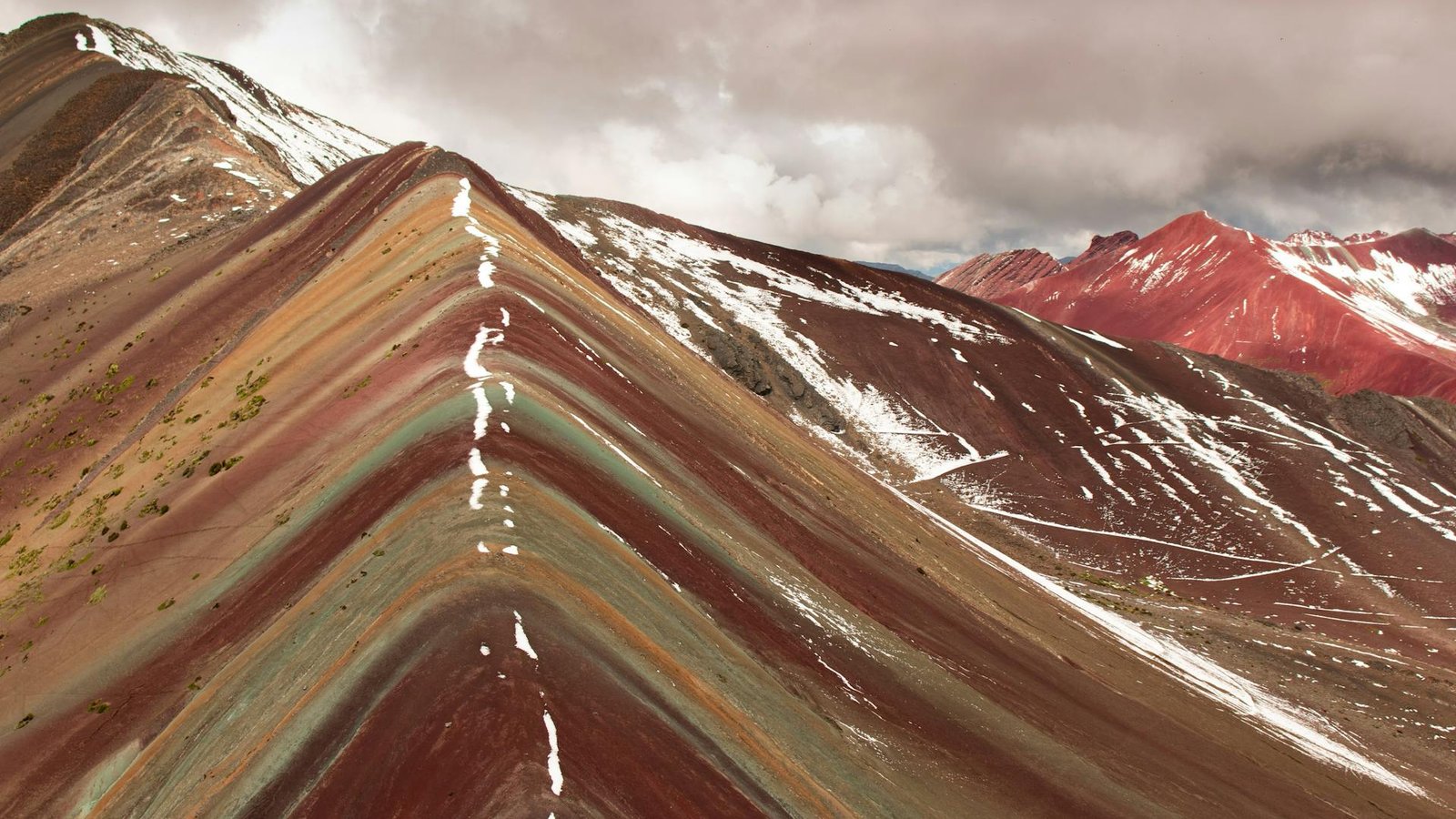
The mountain’s spectacular reddish landscape is primarily the result of the high concentration of iron-rich minerals found in its sedimentary layers. Over millions of years, geological uplift, erosion, and weathering gradually exposed these colorful mineral deposits, creating one of Peru’s most extraordinary natural wonders.
The mineral composition of Vinicunca is very similar to that of nearby Palcoyo Rainbow Mountain, as both belong to the same mountain range and were formed through the same geological processes.
The most distinctive colors visible in these formations are produced by the following minerals:
- Fuchsia Pink: Red clay and sand.
- Whitish: Quartz-rich sand.
- Red: Red clay and weathered rock sediments.
- Green: Ferromagnesian-rich green clays.
- Yellow: Sulfur-rich limestone deposits.
- Purple or Lavender: A mixture of iron and manganese minerals.
Weather & Climate at Vinicunca Rainbow Mountain
The Peruvian Andes, including the Cusco region, experience two distinct seasons throughout the year.
From October to April, the rainy season brings frequent showers and occasional snowfall, which can develop suddenly at high elevations. Because of the complex mountain terrain, online weather forecasts are often unreliable, and conditions can change within minutes.
During this season, daytime temperatures generally range from 32°F to 68°F (0°C to 20°C), with rapid weather changes throughout the day.
The dry season, from May to September, is considered the best time to visit. Although rainfall is minimal, temperatures become much colder, especially during the night and early morning, when they can drop to 14°F (-10°C). Humidity is also extremely low.
Daytime temperatures rarely exceed 72°F (22°C), although the intense Andean sunshine often makes it feel considerably warmer.
When Is the Best Time to Visit Vinicunca?
If your priority is enjoying clear skies and panoramic views, the dry season (May through September) is undoubtedly the best time to visit Vinicunca.
However, the rainy season has its own charm. The surrounding mountains become greener, the colors appear more vibrant, and the landscape comes alive with seasonal vegetation.
Ultimately, the best season depends on your travel style—the key is arriving well prepared for the adventure.
Be sure to follow the practical recommendations included throughout this guide to make the most of your visit.
How Much Does It Cost to Enter Rainbow Mountain?
Admission to Vinicunca Rainbow Mountain is currently free.
The Regional Government of Cusco, through the Regional Tourism Authority, has temporarily assumed administration of the attraction following disputes between neighboring communities regarding entrance fee management.
As a result, visitors are currently not required to pay an entrance fee.
However, all visitors must complete a mandatory online registration before visiting either access route. This process is usually completed by your tour guide if you are traveling with an organized group.
Click here to register your visit.
Tourism at Vinicunca
The rise of tourism at Vinicunca perfectly illustrates the influence of social media on modern travel. The mountain became internationally famous between 2014 and 2016, largely thanks to the rapid growth of platforms such as Facebook, where its colorful landscapes quickly went viral.
Its popularity also helped diversify tourism in Cusco beyond Machu Picchu, especially during periods when landslides or severe weather temporarily disrupted access to Peru’s most famous archaeological site.
Tourism has created new economic opportunities for local Andean communities, demonstrating that sustainable tourism can generate long-term benefits while protecting natural landscapes.
Today, Vinicunca remains one of Peru’s most remarkable examples of community-based tourism and environmental conservation.
General Recommendations for Visiting Vinicunca
To enjoy a safe and comfortable visit to Rainbow Mountain, we recommend following these tips:
- During the rainy season, thunderstorms may develop quickly. If lightning is present, postpone or cancel your hike and avoid carrying unnecessary metal objects.
- Bring a complete change of clothes, including underwear, since rain or perspiration can leave you uncomfortable after the hike.
- Wear sunscreen, a wide-brimmed hat, sunglasses, and long-sleeved clothing to protect yourself from the intense UV radiation found above 15,750 feet (4,800 meters).
- Carry a small backpack with cash (preferably Peruvian soles), water, snacks, candies, medications, and other personal essentials.
- Wear sturdy hiking boots with good ankle support. Bringing a second pair of lightweight shoes for the return trip is also highly recommended.